
It's been exactly one year.
On April 2, 2025, Donald Trump took the stage in the Rose Garden and declared Liberation Day. The promise: historic reciprocal tariffs that would bring factories, jobs and prosperity back to the United States.
Today, the numbers tell another story.
The reckoning no one wanted to see
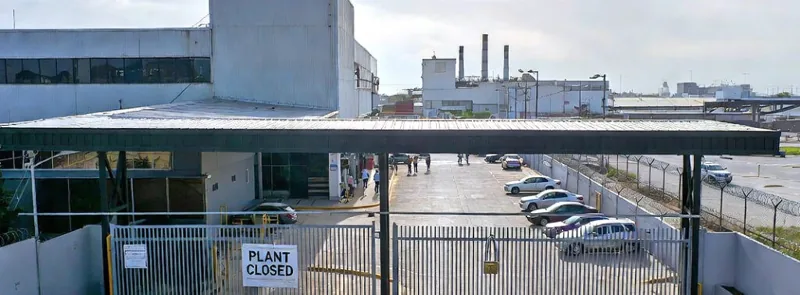
89,000 manufacturing jobs lost.
Another 123,000 jobs lost in transport and warehousing. Industry shed jobs in nearly every month since the announcement. Manufacturing activity contracted for eight straight months.
Investment in factory construction fell 14% between December 2024 and December 2025, the steepest drop since the pandemic. The US trade deficit, which the tariffs were supposed to reduce, hit a record high.
And each American family paid, on average, US$1,700 more in tariffs over the past year.
The US effective tariff rate went from 2% in early 2025 to a peak of 21% right after Liberation Day. Today, after the Supreme Court decision that struck down the tariffs under IEEPA, it stands at 11%. Still nearly six times the pre-Trump level.
The paradox that should bother any CEO
Here's the figure few people discuss: 50% of US imports are intermediate goods, components, raw materials, inputs that factories need to produce.
Tariffing those goods doesn't protect industry. It makes it more expensive.
As HCSS concluded: "Despite all tariffs, manufacturing revival has not materialised. These tariffs apply substantially to essential intermediate goods imports, it appears that American businesses themselves are primarily bearing the higher costs."
The practical result: 71% of mid-sized company CEOs report negative impacts from the tariffs. 62% saw operating costs rise. 46% had a drop in profitability. And 52% cite uncertainty as the main pressure on their short-term decisions.
No one invested with confidence. Capex decisions were postponed. Reshoring projects stayed in the PowerPoint.
For Brazil, the impact was direct
Brazil was the hardest-hit country in Latin America.
US tariffs on Brazilian products reached 50%. Exports to the US fell 6.6% in 2025, US$1.5 billion less between August and December alone, hitting wood, metals, plastics, rubber and fishing.
The response was a forced redirection: Brazilian exports to China grew 6%, and bilateral trade hit a record US$171 billion in 2025, more than double the trade with the US.
It looks like good news. It isn't.
What happened was a swap of dependency. Brazil reduced its exposure to the US and increased its exposure to China, which has its own tariffs, quotas, sanitary decisions and geopolitical interests. As FTI Consulting put it: "Companies that treat tariffs as a bad headline rather than a structural shift will lose market share to those that move early."
Brazil's trade surplus fell to US$68.3 billion, the lowest in three years. The steel industry faces rising imports (forecast to climb another 10% in 2026) with ever-tighter margins. And domestic steel production is expected to fall 2.2% this year.
Paralysis as a side effect
But the most dangerous figure isn't in the trade balance. It's in CEO behavior.
The Conference Board found that 43% of US CEOs cite uncertainty as the main economic threat of 2026, above recession. Worldwide, 29% say the same.
KPMG found that 48% of organizations are actively modeling tariff-mitigation strategies. But 52% of CEOs say uncertainty is the biggest pressure on their decisions.
The practical effect: companies with ever-shorter planning horizons, postponed investments, frozen hiring and a defensive posture that, ironically, weakens precisely the competitiveness the tariffs were supposed to strengthen.
As KPMG described it: "Uncertainty is reentering the system at exactly the wrong time. Companies are leaning harder on price increases to protect margins, pushing capital investments further out, and hesitating to make long-term commitments on jobs or reshoring."
What separates those who survived from those who suffered
In the 17 years I've worked in business consulting, I've never seen a period when so many external variables changed so fast. But I've also never seen such a difference between companies that prepared and companies that reacted.
Those that got through this year without panic share clear traits:
- They had mapped critical dependencies before the tariffs, not just direct suppliers, but the tiers below them
- They had already modeled cost scenarios under different tariff regimes
- They diversified markets before being forced to
- They treated supply chain as a strategic decision, not an operating cost
Those that suffered most did exactly the opposite: they operated with a concentrated chain, 12-month planning and the belief that tariffs are temporary.
76% of foreign-trade professionals today believe tariffs are permanent, not temporary. Those who didn't redesign the chain are still reacting. A year later.
What Magellan does in practice
At Magellan Consulting Group, we use AI as a project tool to anticipate exactly this kind of scenario.
When we diagnose a client's operation, we don't look only at efficiency. We model vulnerabilities: what's the real impact if a tariff changes, a route closes or a market becomes inaccessible?
- Simulation of cost scenarios under different tariff and exchange-rate regimes
- Mapping of critical dependencies across suppliers, routes and destination markets
- Modeling of export redirection with impact on margin and lead time
- Chain redesign based on risk, not just cost
The result isn't a report. It's an operation that knows what to do before it has to figure it out on the spot. Because Liberation Day wasn't the last shock. It was just the most recent.
The uncomfortable point
A year after Liberation Day, the evidence is clear: tariffs as a trade weapon didn't rebuild American industry. But they reconfigured global trade in ways no one predicted, and that won't be reversed.
For anyone operating in Brazil, the lesson isn't about American politics. It's about exposure.
If your chain depends on a single market, a single logistics corridor or a single tariff assumption, you don't have a strategy. You have a bet.
And bets, when they lose, cost dearly.
Final question: A year after the biggest tariff shock in a century, has your company already redesigned its chain, or is it still waiting for the next Liberation Day to react?